
How predictive Analytics Works
Predictive analytics is transforming how businesses make decisions by using data, statistics, and machine learning to forecast future outcomes. Instead of reacting to events after they happen, organizations now use predictive models to stay ahead of trends.
But how does predictive analytics actually work, and why is it so important today?
Let’s break it down in a simple, conversational way.
What is Predictive Analytics?
Predictive analytics is the process of using historical data, statistical algorithms, and machine learning techniques to predict future outcomes.
In simple terms, it answers questions like:
- What will customers buy next month?
- Which users are likely to leave a service?
- How much inventory should a store stock?
According to IBM, predictive analytics is widely used across industries such as healthcare, finance, retail, and marketing to improve decision-making accuracy by up to 20–30% in some cases.
Source: IBM Predictive Analytics Overview
How Does Predictive Analytics Work? (Step-by-step explanation)
Predictive analytics follows a structured process that turns raw data into actionable insights:
1. Data Collection
Businesses gather data from websites, CRM systems, social media, and sales records.
Example: An e-commerce store collects browsing history and purchase behavior.
2. Data Cleaning
Raw data is messy. It is cleaned to remove duplicates, errors, or missing values.
3. Data Analysis
Statistical models and machine learning algorithms identify patterns in the data.
4. Model Building
A predictive model is trained using historical data.
5. Prediction
The model forecasts future outcomes based on new data.
For example, Netflix uses predictive analytics to recommend movies based on your viewing history.

Why Predictive Analytics Matters in Business Today
Businesses use predictive analytics because it reduces uncertainty and improves efficiency.
Key Benefits of Predictive Analytics:
- Better decision-making
- Increased revenue
- Improved customer retention
- Reduced operational risks
- Smarter marketing campaigns
A report by McKinsey shows that companies using advanced analytics are 2.6 times more likely to outperform competitors in profitability.
Source: McKinsey Analytics Insights
Real-World Examples of Predictive Analytics
1. E-commerce (Amazon-style recommendations)
Online stores predict what customers are likely to buy next.
2. Healthcare
Hospitals predict patient risks such as readmission or disease outbreaks.
3. Banking & Finance
Banks detect fraud by analyzing unusual transaction patterns.
4. Marketing
Marketers predict which leads are most likely to convert.
Best Ways to Use Predictive Analytics Effectively
If you want to apply predictive analytics in your business, here are best practices:
Use clean and high-quality data
Bad data leads to bad predictions.
Choose the right tools
Popular tools include:
- Python (Scikit-learn)
- Microsoft Azure AI
- Google Cloud AI
Continuously update models
Markets change, and models must evolve too.
Combine human insight with AI
AI predicts—but humans interpret.
What are the benefits of predictive analytics in marketing?
Predictive analytics helps marketers:
- Identify high-value customers
- Personalize campaigns
- Improve conversion rates
- Reduce advertising waste
For example, companies using predictive targeting have reported up to 40% improvement in campaign ROI.
How does predictive analytics improve decision-making?
Predictive analytics improves decisions by replacing guesswork with data-driven insights. Instead of relying on assumptions, businesses use evidence-based forecasting.
This leads to:
- Faster decisions
- Lower risks
- More accurate forecasting
Internal Digital Strategy Insight
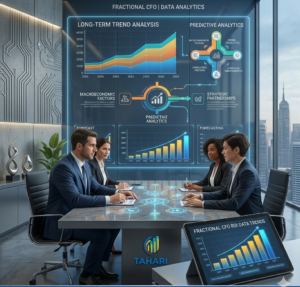
Implementing predictive models requires a blend of financial foresight and technical precision. Tahari Solutions partners with leadership teams to bridge this gap, providing fractional CFO expertise and custom AI integration to turn complex data into a clear competitive advantage.
External Learning Resources
FAQs: Predictive Analytics Explained
1. What is predictive analytics in simple words?
It is using past data to predict future outcomes like sales, customer behavior, or risks.
2. How accurate is predictive analytics?
Accuracy depends on data quality and model design, but many systems achieve 70–90% accuracy in controlled environments.
3. What industries use predictive analytics the most?
Retail, healthcare, finance, marketing, and logistics are the top users.
4. Is predictive analytics part of AI?
Yes. It is a branch of artificial intelligence and machine learning.
5. Can small businesses use predictive analytics?
Absolutely. Even small businesses can use tools like Google Analytics or CRM-based prediction features.
Final Thoughts
Predictive analytics is no longer a luxury—it’s becoming a necessity for modern businesses. Whether you’re running a startup or a large enterprise, understanding how predictive analytics works can help you make smarter, faster, and more profitable decisions.
By combining data, machine learning, and strategic thinking, businesses can move from reacting to predicting—and that shift is where real competitive advantage lies.


Be the First to Comment
Share your thoughts and join the conversation
Leave a Comment